
How Research Chemicals Are Tested in Laboratories
How Research Chemicals Are Tested in Laboratories
When scientists identify a new or unregulated compound, ensuring its identity, purity, stability, and safety becomes critical. The question of how these substances are examined in a legitimate research setting can be answered by looking at the standard workflow, the tools used, and the safeguards in place. This article explores the typical pathways and methods used to determine what a research chemicals is, what it contains, and how it behaves under different conditions. Best guide on How Research Chemicals Are Tested in Laboratories
The purpose How Research Chemicals Are Tested in Laboratories
- Verification: Confirm the exact chemical identity and molecular structure.
- Purity assessment: Determine the amount of the target compound vs. impurities.
- Stability and shelf life: Understand how the substance degrades over time and under various storage conditions.
- Safety and compliance: Ensure the material meets ethical, legal, and regulatory requirements before use in further experiments.
- Characterization: Build a comprehensive profile that supports reproducibility and data interpretation. Best Place To Buy Research Chemicals Online
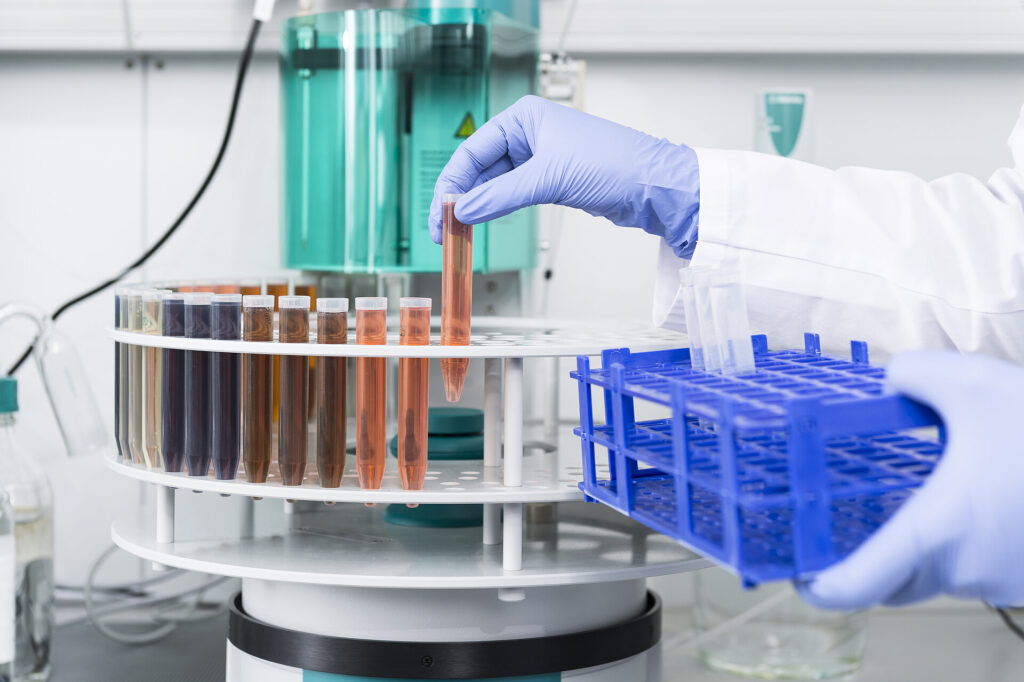
The overall workflow of How Research Chemicals Are Tested in Laboratories
1) Sample receipt and documentation
- Chain-of-custody is established to track samples from receipt to disposal.
- Initial vendor information, batch numbers, and any known hazards are recorded.
- A clear plan is outlined for the analyses to be performed, based on the material’s intended research use.
2) Identity confirmation
- The primary goal is to verify that the chemical matches the expected structure and name.
- Common approaches include spectroscopic and chromatographic techniques, sometimes complemented by elemental analysis.
3) Purity and composition
- Quantitative methods assess how much of the target substance is present and what impurities or related compounds exist.
- This step helps determine if the material is suitable for its intended experiments and whether further purification is needed. Research Chemicals For Sale
4) Stability testing
- The substance is exposed to various conditions (light, heat, humidity, solvents) to observe potential degradation pathways.
- Results inform storage recommendations and experimental planning.
5) Data interpretation and reporting
- Analytical results are compiled into a cohesive report, including methods, instrument conditions, and confidence in identifications.
- Findings guide decision-making about purchase, handling, and downstream experiments.
Key analytical techniques commonly used
- Mass spectrometry (MS) and gas chromatography (GC-MS)
- Used for identifying molecular mass and fragmentation patterns.
- GC-MS is particularly effective for volatile and semi-volatile compounds.
- Liquid chromatography (LC-MS)
- A versatile option for non-volatile, thermally labile, or polar substances.
- Provides both separation data and mass-to-charge information.
- Nuclear magnetic resonance (NMR) spectroscopy
- Offers detailed information about molecular structure and connectivity.
- Often used to confirm the arrangement of atoms after identity is suspected.
- Infrared (IR) spectroscopy
- Helps identify functional groups and assess certain structural features.
- Ultraviolet-visible (UV-Vis) spectroscopy
- Useful for conjugated systems and purity checks in certain contexts.
- High-performance liquid chromatography (HPLC) and ultra-performance LC (UPLC)
- Essential for purity assessment and quantification in many laboratories.
- Coupled detectors (UV, fluorescence, MS) broaden the amount of information obtained.
- Elemental analysis
- Confirms the elemental composition (carbon, hydrogen, nitrogen, etc.) and supports formula verification.
- X-ray crystallography (rarely routine)
- Provides unambiguous three-dimensional structures, used when precise geometry is critical.
- Thermal analysis (DSC, TGA)
- Assesses thermal properties, stability, and composition in some cases.
Quality assurance and validation
- Method validation: Analytical methods are validated for accuracy, precision, sensitivity, specificity, and robustness before routine use.
- Calibration and controls: Standards, blanks, and quality controls are run to ensure reliability and to detect drift or contamination.
- Documentation: Every step, instrument setting, and result is documented for reproducibility and regulatory compliance.
- Safety and ethics: Work with research chemicals requires appropriate risk assessments, PPE, and institutional oversight. Visit Chemical Centre LLC
Handling and safety considerations
- Proper containment: Some research chemicals may require dedicated containment or fume hoods, depending on volatility and toxicity.
- Material compatibility: Storage and solvents should be chosen based on chemical stability to prevent reactions.
- Waste management: Hazardous waste is disposed of according to institutional and regulatory guidelines.
- Training: Personnel involved in testing are trained in handling, interpretation, and emergency procedures.
Best Research Chemicals To Buy Online
Buy A-pvp Online
Buy A-pihp Online
Buy a-php Online
Buy 2c-e Online
Buy allylescaline Online
Buy 5-cl-adb-a Online
Regulatory and ethical context
- Compliance: Testing practices align with local, national, and international regulations governing chemical research.
- Responsible use: Researchers avoid distributing or applying unverified or uncontrolled substances outside approved projects.
- Documentation: Records support traceability and accountability, which are essential in both safety and scientific integrity.
Practical tips for researchers and readers
- Start with a clear hypothesis about identity and purity, then select complementary techniques to confirm results.
- Use orthogonal methods (e.g., MS plus NMR) to build a robust confirmation of identity.
- Keep meticulous records of instrument conditions, calibration, and sample history to enable reproducibility.
- Plan stability studies early to avoid surprises during long experiments or storage.
- Prioritize safety and ethics at every stage, ensuring all approvals and training are in place.
Conclusion
Understanding How Research Chemicals Are Tested in Laboratories reveals a careful, multi-faceted approach that emphasizes accuracy, safety, and regulatory compliance. From identity confirmation to purity, stability, and reporting, laboratories rely on a suite of analytical tools and rigorous procedures to produce reliable, reproducible results that support responsible scientific advancement.